As Amazon Associates, we earn from qualifying purchases. This means we may receive a small commission at no extra cost to you if you click through and make a purchase.

- Brand
- Philips
- Our score
- 9.0 out of 10
- Very positive
Selecting a fully automated espresso machine requires balancing extraction mechanics, thermal stability, and daily hygiene overhead. The Philips 3200 LatteGo (model EP3241/54) is engineered for households seeking specialty milk and coffee drinks without the labor-intensive teardown typical of commercial espresso hardware. Delivering five primary drink profiles—espresso, classic coffee, americano, cappuccino, and latte macchiato—alongside hot water output, this unit combines an integrated bean hopper, a ceramic flat-burr grinding mechanism, and a pressurized brewing core within a single compact chassis. In this philips ep3241/54 review, we analyze how its mechanical components perform under daily use to help you determine if its feature set matches your routine.
Evaluating automated coffee systems demands a thorough look at underlying engineering: grinder composition, thermal recovery rates, water conditioning, and milk aeration mechanics. Our examination unpacks the core philips 3200 series lattego specs, focusing on the functional impact of the 100% ceramic burrs, the 1500-watt thermoblock system, and the tubeless milk carafe assembly. We also evaluate the operational trade-offs of the glossy composite exterior, maintenance requirements for the removable brew core, and the physical countertop clearance necessary for daily operation. Readers comparing modular automatic platforms across different tiers can explore the phillips 4400 fully automatic espresso and cappuccino machine to gauge how interface and capacity options vary across the manufacturer lineup.
What You Get With the Philips 3200 LatteGo
The Philips 3200 LatteGo ships as an integrated, single-station bean-to-cup platform designed to eliminate third-party accessories and manual tamping tools. The product listing specifies the following components and standard features included in the package:
- Fully automatic espresso machine base with integrated 1500-watt heating system and glossy black finish.
- Two-part, tubeless LatteGo milk frothing module designed for direct cup dispensing without internal siphons.
- Built-in 100% ceramic coffee grinder engineered for whole bean processing.
- AquaClean ion-exchange water filter cartridge for internal scale prevention.
- Removable mechanical brew group accessible via a dedicated side-access service door.
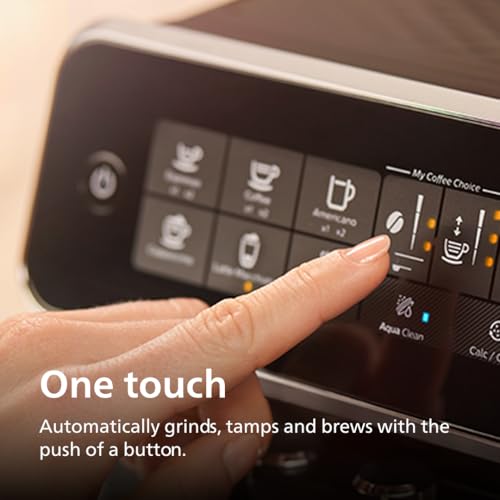
- Intuitive touch display interface with illuminated capacitive buttons for one-touch drink selection.
- My Coffee Choice customization system for adjusting aroma strength and drink volume output.
- Removable water reservoir and internal bean container rated at 3.8 pounds total machine capacity.
- Integrated hot water bypass dispensing function for tea and Americano beverages.
- Detachable power supply interface operating on standard 110-volt electrical current.
Key Specifications
| Specification Category | Manufacturer Rating |
|---|---|
| Model Number | EP3241/54 |
| Operation Architecture | Fully Automatic Bean-to-Cup |
| Power Consumption | 1500 Watts |
| Electrical Rating | 110 Volts via AC Power Connection |
| Grinder Construction | 100% Ceramic Grinding Burrs |
| Beverage Selections | Espresso, Coffee, Americano, Cappuccino, Latte Macchiato, Hot Water |
| Milk System Type | LatteGo 2-Part Tubeless Frother |
| Water Filtration | AquaClean Filter System (up to 5,000 cups without descaling) |
| Product Dimensions | 10 inches Deep x 17 inches Wide x 15 inches High |
| Unit Weight | 8 Kilograms (approx. 17.64 lbs) |
| Housing Material & Finish | Plastic Construction with Glossy Black Finish |

Grinder Architecture and Extraction Consistency
Grinding integrity is the single most critical variable in espresso extraction, directly dictating extraction yield and flow rate. The philips 3200 ceramic grinder utilizes 100% ceramic burrs rather than standard hardened steel. Ceramic is chemically inert and features low thermal conductivity, meaning it does not transfer mechanical motor heat into coffee grounds during repeated grinding cycles. This thermal stability prevents heat-induced degradation of volatile aromatic compounds and coffee oils before pressurized water contact occurs. The listing confirms this grinder is engineered specifically for whole beans, processing dry coffee directly into the internal dosing chute without requiring manual weighing or external dosing tools.
Once ground, coffee enters the brewing chamber where the proprietary Aroma Extract system manages the fluid dynamics of the extraction cycle. This mechanism continuously balances water flow velocity with precise philips 3200 temperature control, maintaining the brewing temperature within the optimal range for dissolved solids extraction while preserving volatile aromatics. By controlling the contact time between heated water and the compacted coffee puck, the machine mitigates bitter over-extraction while avoiding the sour, thin profile typical of under-extracted shots. Users adjust these brewing dynamics via the My Coffee Choice interface, which calibrates coffee volume and aroma intensity settings directly through the touch display.
For households that regularly switch between espresso roasts and longer coffee pulls, the consistency of the ceramic burrs provides uniform particle size distribution across multiple servings. While commercial units often use heavier steel flat burrs that require frequent calibration, ceramic components maintain their sharp cutting edges over long operational lifespans without burr dulling. If your household requires even more drink versatility, reviewing the philips 4400 series fully automatic espresso machine 12 hot iced coffees quick to clean lattego milk illustrates how automated burr dosing expands across broader beverage catalogs.
Milk Aeration Dynamics and Cleaning Protocols
Traditional automatic espresso machines rely on internal rubber tubes, metal steam wands, or complex multi-piece siphoning assemblies to froth milk. Over time, these narrow channels trap milk fats and liquid residues, creating sanitation risks unless flushed with dedicated chemical detergents. The LatteGo system circumvents this entirely by utilizing a patented two-piece chamber assembly with zero hidden tubes or conduits. The module locks directly onto the hot water spout, drawing milk upward using a high-speed circular aeration chamber that combines milk and high-pressure steam before dispensing dense microfoam straight into the cup.
From an operational standpoint, philips lattego milk frother cleaning is exceptionally efficient compared to traditional steam assemblies. Because the milk container consists solely of two interlocking plastic components and a lid, users can detach the assembly from the machine base and rinse it completely clean under a tap in as little as 15 seconds. There are no valves to disassemble, no internal needles to clear, and no hidden milk paths where sour residues can hide. Both components are fully dishwasher safe, allowing for frequent sanitization cycles without damaging structural clips or seals.
This tubeless configuration fundamentally changes the workflow for milk-based drinks like cappuccinos and latte macchiatos. Users can pour precisely the amount of dairy or plant-based milk needed for a single beverage directly into the LatteGo container, froth the drink, and immediately rinse the container without wasting milk or purging steam lines into a drip tray. For users who drink milk-based beverages daily but dread the maintenance routines associated with commercial steam wands, this two-part mechanical assembly removes the friction that often leads people to abandon home espresso machines.

Brew Group Mechanics and Water Filtration Lifespan
The mechanical core of any automated coffee machine is its internal brew group, which handles puck dosing, tamping, pressurized water delivery, and spent cake ejection. Many competing machines permanently enclose this module within the chassis, requiring complex chemical flush cycles and professional servicing when mechanical jams occur. The Philips 3200 features a fully removable brew group accessed by sliding open the side housing panel. Following proper philips 3200 brew group maintenance protocols simply requires sliding the unit out and rinsing it directly under warm running water to remove loose grounds and residual oils before clicking it back into place.
Scale accumulation represents the primary failure point for high-wattage home espresso machines, as dissolved minerals precipitate out of heated water and coat internal thermoblock conduits. This machine integrates the philips 3200 aquaclean filter directly into the removable water tank. The AquaClean cartridge utilizes micro-porous filtration and ion-exchange resin to purify tap water before it enters the high-pressure heating loop. When users replace the filter promptly when prompted by the display interface, the machine can brew up to 5,000 cups before requiring a full descaling procedure, preserving water flow pressure and protecting the internal 1500-watt heating core from thermal insulation caused by limescale.
Maintaining optimal water purity is not merely an equipment longevity concern; it directly impacts flavor clarity and extraction yields. Mineral-heavy water distorts espresso acidity and suppresses delicate floral and fruit notes. By combining chemical-free water conditioning with an accessible, washable mechanical core, the machine minimizes maintenance downtime. For broader perspective on advanced filtration ecosystems and automated interfaces, examining the philips 5500 coffee machine demonstrates how baseline water management engineering scales into premium platform variants.

Spatial Footprint and Countertop Integration
Integrating an automatic coffee station into a home kitchen requires careful physical planning around cabinetry and power distribution. The philips 3200 lattego dimensions measure 10 inches in depth, 17 inches in width, and 15 inches in height, weighing in at an even 8 kilograms (approximately 17.64 pounds). While the 10-inch depth is remarkably shallow for a machine housing a grinder, pump, and thermoblock, the 17-inch width demands a generous horizontal countertop span. Prospective buyers must ensure they have sufficient unobstructed bench space to accommodate both the machine body and daily side access.
Countertop height clearance is another practical installation consideration. At 15 inches tall, the machine comfortably slides beneath standard 18-inch upper kitchen cabinets. However, the whole-bean hopper and the removable water tank require upward and forward clearance during daily refills. Because the water reservoir slides forward from the front right and the brew group access door opens outward along the right side panel, installing this unit tightly against a right-hand wall or under low-hanging shelves will impede routine maintenance access. Proper placement requires at least two to three inches of side clearance for smooth maintenance door operation.
From an electrical perspective, the unit operates on a standard 110-volt line but draws a peak of 1500 watts during active brewing and steam generation phases. High-wattage heating components cause rapid electrical load spikes during initial startup and steam production. To avoid tripping household circuit breakers, the machine should ideally share its electrical branch circuit with low-draw appliances rather than competing directly with heavy kitchen loads like microwaves, air fryers, or high-draw electric kettles.
Philips 3200 LatteGo Pros and Cons
Pros
- Durable 100% ceramic grinder preserves bean aroma
- Tubeless two-part LatteGo system cleans in seconds
- AquaClean filter delays descaling up to 5,000 cups
- Five direct coffee varieties accessible via touch display
- Fully removable brew group enables effortless tap rinsing
Cons
- Wide 17-inch footprint requires substantial counter space
- Exterior housing constructed entirely of glossy plastic
- High 1500-watt power draw requires dedicated circuit capacity
Is the Philips 3200 LatteGo Worth It
Determining whether the is philips 3200 lattego worth it comes down to evaluating your tolerance for daily machine cleaning against your expectations for beverage customization. If your daily routine centers on milk-forward specialty beverages like cappuccinos and latte macchiatos, the LatteGo platform provides an unmatched hygiene advantage. The ability to complete a full milk system rinse in 15 seconds under running water eliminates the single most frustrating chore associated with home specialty coffee, making high-frequency daily use far more practical.
The mechanical package is equally compelling for buyers who want authentic fresh-bean espresso without mastering manual puck preparation. The 100% ceramic burrs deliver reliable grain uniformity without scorching the beans, the 1500-watt heating system reaches operational temperature rapidly, and the AquaClean filtration minimizes descaling routines. However, consumers seeking professional 58mm portafilter manual pressure profiling or micro-adjustments for grind size will find the button interface and automated dosing parameters limiting compared to dedicated manual espresso rigs.
Furthermore, buyers must account for the exterior build: the chassis relies entirely on glossy plastic materials rather than brushed stainless steel, making it susceptible to visible fingerprints and cleaning micro-scratches over time. If you have the 17-inch horizontal counter space to spare and prioritize one-touch automation and effortless cleanup above all else, the Philips 3200 LatteGo represents a highly efficient, mechanically sensible investment for the modern kitchen counter.
FAQ
How does the Philips LatteGo milk system work without tubes?
The LatteGo system utilizes a two-part plastic chamber that mounts directly to the steam outlet. High-pressure steam and air mix at high velocity inside this circular aeration chamber, pulling milk upward from the container and frothing it directly before it pours out the spout into the cup, completely eliminating internal hoses, siphons, and hidden channels.
What routine is required for Philips 3200 brew group maintenance?
The internal brew group slides out from the right-hand service door and should be rinsed thoroughly under warm tap water once a week to wash away coffee grounds and oils. The manufacturer specifies that no soap or abrasive detergents should be used during rinsing, as this strips away the factory lubrication required for smooth mechanical movement.
How does the AquaClean filter eliminate descaling for 5,000 cups?
The AquaClean filter employs micro-porous filtration and ion-exchange resin to trap mineral ions before water enters the internal 1500-watt thermoblock. When you replace the filter cartridge whenever the machine alerts you (typically every eight filter cycles), it prevents limescale buildup in the fluid circuits, eliminating the need to descale for up to 5,000 brewed cups.
What are the exact Philips 3200 LatteGo dimensions and clearance needs?
The machine measures 10 inches deep, 17 inches wide, and 15 inches high, weighing 8 kilograms. Because the unit features a front-loading water reservoir and a right-side maintenance door for the brew group, you should plan for at least 18 inches of overhead clearance and several inches of clearance along the right side of the chassis.
What electrical specifications does the Philips 3200 LatteGo require?
The Philips 3200 operates on a standard 110-volt power supply through an AC adapter and draws up to 1500 watts during active grinding, thermoblock heating, and steam production. It is recommended to run the machine on an electrical circuit that does not simultaneously run other high-wattage heating appliances.
See the current listing on Amazon
Specifications on this page are read from the product listing. Scores are out of 10, based on listed specifications and buyer feedback.