As Amazon Associates, we earn from qualifying purchases. This means we may receive a small commission at no extra cost to you if you click through and make a purchase.

- Brand
- Roger Carp
- Our score
- 9.8 out of 10
- Overwhelmingly positive
Model railroad enthusiasts and cultural historians seeking an archival visual chronicle of twentieth-century toy trains will find a specialized reference in Lights, Camera, Lionel Trains!. Published as an oversized visual record, this release focuses on the broad cultural penetration of electric toy trains across family living rooms, holiday traditions, department store displays, and mid-century mass media. For collectors evaluating whether this volume serves as a bench repair guide or a display-grade historical retrospective, the publication targets the visual and narrative heritage of the brand rather than mechanical maintenance schematics. It delivers an organized compilation of vintage imagery that captures the cultural stature of Lionel during its commercial peak.
This technical breakdown examines the publication specifications, structural footprint, and visual scope of the volume. We analyze the physical edition standards, including exact shelf dimensions, page count, and binding heft, alongside an evaluation of the curated archival content. The following sections explore the editorial presentation across its historical photo essays, assess how the volume integrates into existing enthusiast libraries, and clarify what collectors should expect regarding physical build quality and archival documentation.
What You Get With the Lights, Camera, Lionel Trains!
The volume is published as a dedicated visual retrospective designed to document the commercial and cultural footprint of Lionel electric trains throughout the twentieth century. The physical release includes the following documented features and content points directly from the publication data:
- Complete First Edition hardbound volume published by Project Roar Publishing.
- 224 printed pages organized into a curated visual narrative.
- 100 distinct photo essays pairing historical imagery with analytical commentary.
- Archival collection of seldom-seen vintage photography and preserved promotional images.
- Reproduction of historic print advertisements from twentieth-century retail campaigns.
- Visual documentation of classic department store window displays and holiday floor layouts.
- Archival exploration of Lionel trains in classic television broadcasts and Hollywood film productions.
Key Specifications
| Specification Attribute | Product Detail |
|---|---|
| Book Title | Lights, Camera, Lionel Trains! A Photo History of an American Icon |
| Publisher | Project Roar Publishing |
| Publication Date | November 6, 2024 |
| Edition Classification | First Edition |
| Print Length | 224 pages |
| Item Weight | 2.8 pounds |
| Physical Dimensions | 11.25 x 0.81 x 8.75 inches |
| Primary Language | English |
| ISBN-10 | 1933600071 |
| ISBN-13 | 978-1933600079 |
| Core Content Structure | 100 visual photo essays |

Physical Dimensions and Shelf Footprint
Analyzing the physical build starts with reviewing the verified lights camera lionel trains specs. The book measures 11.25 inches in vertical height, 8.75 inches in horizontal width, and carries a spine depth of 0.81 inches. These dimensions position the volume firmly in the traditional landscape-leaning coffee-table classification. While standard utility bookshelves accommodate heights up to 10 or 11 inches, vertical shelving units with fixed shelf spacing may require adjustment to house this 11.25-inch volume upright. Storing the volume horizontally on display tables or deep collector shelves is often necessary to avoid shelf overhang.
At an official shipping and physical weight of 2.8 pounds, the volume exhibits substantial physical mass for a 224-page release. This heft reflects the heavy paper stock typical of photography-driven monographs, ensuring that full-bleed images and fine-screen color separations do not suffer from excessive page translucency. However, the 2.8-pound weight makes extended handheld reading less ergonomic. Readers will achieve the best viewing experience by supporting the volume flat across a wide reading desk, dedicated library stand, or sturdy coffee table.
The structural proportions and lights camera lionel trains dimensions make it an attractive companion for hobby display rooms. Collectors frequently stage their primary literature near active layout benches or model display cases. When laying out reference volumes alongside active train room workbenches, enthusiasts who use auxiliary equipment like a creality nebula camera to inspect fine mechanical parts can balance their workspace by keeping this large-format visual history resting flat on a nearby viewing credenza.

Archival Visual Scope and Historical Documentation
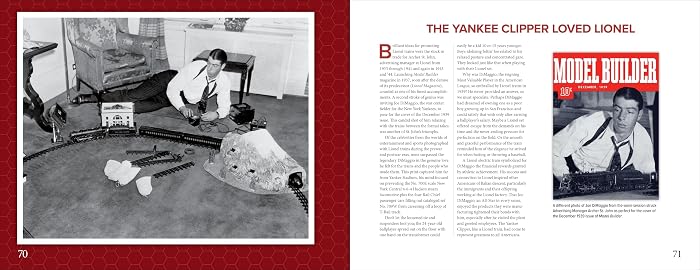
The primary editorial draw of this release centers on its curated visual archive. Formatted as a comprehensive lights camera lionel trains photo history, the volume distributes its historical coverage across 100 dedicated photo essays. Rather than organizing the material strictly by locomotive serial numbers or chassis production codes, the editorial structure uses thematic essays to contextualize Lionel products within twentieth-century American culture. The essays document how toy train sets evolved from simple living room floor novelties into central elements of mid-century holiday family rituals.
A notable strength of the curated content is the inclusion of seldom-seen vintage photography alongside historic commercial advertisements. These visual artifacts show how Lionel marketed its products during peak postwar expansion. By reproducing retail promotional spreads and department store display configurations, the book provides collectors with visual evidence of original point-of-sale setups. Modelers interested in recreating historically accurate mid-century layouts can examine these archival photos to verify period-correct store window designs and residential floor arrangements.
The scope also examines Lionel train appearances across entertainment media, including mid-century television broadcasts and classic Hollywood feature films. This media-focused documentation illustrates how Lionel shaped public perceptions of industrial railroading and domestic recreation. In this comprehensive lionel trains photo history review, the volume succeeds primarily as a cultural survey, offering broader social context than typical hardware-focused identification guides.

Production Quality and Edition Analysis
The publisher behind the release is Project Roar Publishing, an imprint recognized among model railroading historians for specialized documentation on vintage toy trains. Released on November 6, 2024, the lights camera lionel trains project roar catalog addition represents a First Edition printing. A detailed lights camera lionel trains edition breakdown confirms that the volume holds unique identifiers under ISBN-10 1933600071 and ISBN-13 978-1933600079. For serious bibliophiles who track publication runs, securing a First Edition from a specialist publisher adds long-term library value.
The physical construction features a rigid exterior casing, establishing the lights camera lionel trains hardback presentation as a durable reference asset. A spine thickness of 0.81 inches across an exact lights camera lionel trains page count of 224 pages points to solid binding integrity capable of supporting frequent opening across coffee tables. While the product listing does not specify precise paper stock weight in grams per square meter or the specific thread-sewn binding method, the total weight of 2.8 pounds indicates dense, heavy-gauge paper suitable for graphic reproduction.
The listing identifies the volume as an award-winning coffee-table book, highlighting its visual design standards. The layout balances historical photographic prints with explanatory typography, avoiding cluttered page compositions. Collectors should note that while the text offers commentary on Lionel craftsmanship and historical significance, it focuses on narrative history rather than manufacturing variation checklists or price guide metrics.
Display Compatibility and Collector Utility
Evaluating lights camera lionel trains for collectors requires understanding how this publication fits into an existing research library. Enthusiasts whose shelves are filled with repair manuals, wiring diagrams, and parts replacement catalogs will find that this book occupies a different role. It is not an instructional manual for rewinding open-frame universal motors or servicing mechanical reverse units. Instead, it operates as an aesthetic and historical appreciation piece that documents the cultural world in which those trains were sold and operated.
For train room displays, the cover art and substantial dimensions make it suitable for outward-facing book stands. Enthusiasts who maintain climate-controlled display spaces or dedicated train rooms often manage their collector environments carefully. Hobbyists who safeguard high-value historical trains and vintage printed memorabilia with systems such as a wyze base station will find that this hardbound volume integrates naturally into archival display cabinets alongside boxed postwar rolling stock.
The utility of the book also extends to general social historians and casual fans of mid-century Americana. Because the 100 photo essays present self-contained narratives, readers can explore individual sections without needing to digest the entire 224-page volume in sequence. This segmented format makes the volume accessible to visiting guests while remaining informative for experienced Lionel operators who appreciate retail history and vintage marketing art.
Lights, Camera, Lionel Trains! Pros and Cons
Pros
- Features 100 curated historical photo essays
- Substantial 224-page First Edition print length
- Includes seldom-seen vintage photography and retail advertisements
- Durable 2.8-pound coffee-table build quality
- Documents iconic department store displays and Hollywood appearances
Cons
- Heavy 2.8-pound weight limits handheld reading comfort
- Focuses on cultural history rather than technical repair schematics
- Large 11.25-inch height may exceed standard bookshelf clearance
Is the Lights, Camera, Lionel Trains! Worth It
Determining whether lights camera lionel trains is worth it comes down to what you expect from a model railroading publication. If you are searching for a technical workshop manual containing exploded parts diagrams, electrical schematics, or current secondary-market pricing matrices, this book does not cover those specific diagnostic areas. The publisher designed this release strictly as an archival visual history celebrating the cultural and commercial legacy of the Lionel brand across twentieth-century America.
For collectors who appreciate rare advertising reproductions, historical department store layouts, and the media history of electric toy trains, this First Edition volume offers substantial value. The combination of 100 focused photo essays, a verified 224-page print length, and a substantial 2.8-pound physical build ensures a high-grade presentation that honors its subject matter. The curated historical photography provides visual context that mechanical manuals simply do not offer.
Ultimately, the volume serves as a high-quality historical reference for dedicated Lionel enthusiasts, design historians, and modelers seeking period-accurate layout inspiration. Its sturdy dimensions and focused visual curation make it a compelling addition to any model railroad library or living room coffee table.
FAQ
How many pages are included in Lights, Camera, Lionel Trains!
The volume features an exact print length of 224 pages, organized into 100 distinct visual photo essays accompanied by historical commentary.
What are the exact physical dimensions and weight of the book?
The hardbound book measures 11.25 inches tall, 8.75 inches wide, and 0.81 inches thick along the spine. It has an official weight of 2.8 pounds.
Who is the publisher of this Lionel photo history volume?
The book is published by Project Roar Publishing, a specialist publisher known for historical and reference literature concerning vintage toy trains. The publication date is November 6, 2024.
Does this volume provide technical repair instructions for Lionel engines?
No, the volume does not include mechanical schematics, motor wiring diagrams, or repair instructions. It is designed as a visual coffee-table book and cultural photo history documenting Lionel advertising, store displays, film appearances, and American family life.
What specific historical subjects do the photo essays cover?
The 100 photo essays cover seldom-seen vintage photography, twentieth-century retail print advertisements, living room holiday layouts, elaborate department store window displays, and appearances of Lionel trains in television broadcasts and Hollywood movies.
Is this release classified as a First Edition?
Yes, the official publication metadata identifies this November 2024 release as a First Edition under ISBN-10 1933600071 and ISBN-13 978-1933600079.
See the current listing on Amazon
Specifications on this page are read from the product listing. Scores are out of 10, based on listed specifications and buyer feedback.


