As Amazon Associates, we earn from qualifying purchases. This means we may receive a small commission at no extra cost to you if you click through and make a purchase.

- Brand
- Anycubic
- Buyer rating
- 4.3 out of 5
- Mostly positive, average of Amazon buyer ratings
For operators running the anycubic photon mono m5s pro, selecting the correct release membrane is essential for achieving advertised cycle speeds without print failures. The Anycubic 10.1 ACF Film is the manufacturer’s dedicated consumable engineered to handle the severe peel forces generated by 12K and 14K rapid masking engines. Rather than relying on standard fluoropolymer sheets that generate excessive vacuum suction during rapid lift stages, this advanced composite film minimizes mechanical release resistance. If you need a reliable vat liner that keeps pace with rapid lift speeds without introducing print detachment, this dual-sheet replacement pack provides the exact factory specification.
This technical evaluation breaks down every operational parameter of the anycubic photon mono m5s pro acf film to verify fitment, optical behavior, and durability. We examine how the 278 by 190 millimeter sheet area matches standard 10.1-inch vat frames, what the 0.3 millimeter thickness means for UV cure timing, and how to execute proper installation without damaging optical clarity. The following sections analyze physical specifications, light transmission dynamics, release mechanics, maintenance lifespans, and overall value for high-speed workflows.
What You Get With the Anycubic 10.1 ACF Film
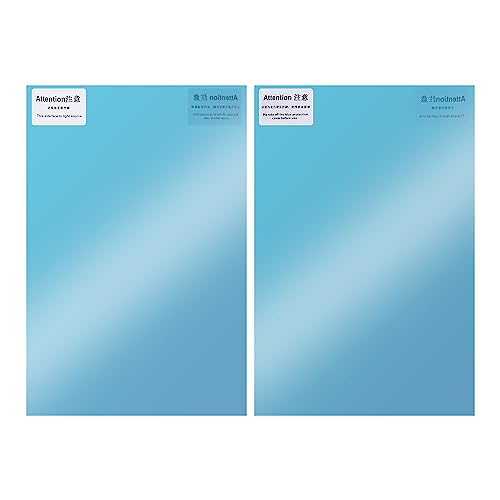
The product arrives as a pair of precision-cut sheets listed under manufacturer part number US S020159, tailored for rapid-release 10.1-inch stereolithography resin vats. Each sheet serves as a direct consumable replacement to restore factory peel performance when surface wear or mechanical punctures compromise print reliability.
- Two Anycubic 10.1 ACF Film replacement sheets measuring 278 by 190 millimeters
- Calibrated 0.3 millimeter material thickness engineered for low peel resistance
- Rated optical clarity delivering approximately 95 percent light transmittance for UV curing
- Protective masking layers on both surfaces that must be removed prior to installation
- Direct hardware compatibility with Anycubic Photon Mono M5s, M5s Pro, M7, and M7 Pro vats
- Customer support assistance with vendor inquiry response within 12 hours
Key Specifications
| Specification Parameter | Listing Detail |
|---|---|
| Brand | ANYCUBIC |
| Model Name | ACF |
| Model Series | Photon Mono |
| Manufacturer Part Number | US S020159 |
| Sheet Dimensions | 278 x 190 mm |
| Film Thickness | 0.3 mm |
| Light Transmittance | Approximately 95% |
| Screen Size Compatibility | 10.1 inches |
| Package Quantity | 2 Pieces (Roll Quantity: 2) |
| Compatible Devices | Anycubic Photon Mono M5s, M5s Pro, M7, M7 Pro |
Dimensional Tolerances and Vat Fit for 10.1-Inch Hardware
Precise physical dimensions are essential when fitting a photon mono m5s pro resin vat film, as improper dimensions prevent the vat gasket from sealing correctly. The Anycubic 10.1 ACF Film measures exactly 278 by 190 millimeters, providing an optimal perimeter margin that fully covers the 10.1-inch LCD exposure zone. This size ensures the membrane seats squarely within the dual-frame clamping system without excessive overhang interfering with vat mounting screws. Operators working with the photon mono m5s will find this pre-cut footprint matches factory retention rings cleanly.
The 278×190 millimeter sheet area provides ample gripping margin during the tensioning process. Because the film is supplied without pre-punched fastener holes, the user clamps the material between the inner tension ring and outer vat body, allowing the perimeter retention screws to pierce the sheet uniformly. The mechanical integrity of the 0.3 millimeter membrane prevents tears or localized stress cracks as the screws draw the bracket into place. Maintaining uniform perimeter tension guarantees that the active vat window remains flat across the entire LCD masking surface during rapid layer lifting.
Verifying boundary tolerances confirms cross-generational compatibility within Anycubic’s 10.1-inch resin printer family. The anycubic 278×190 acf film thickness of 0.3 millimeters introduces a heavier structural cross-section than standard release sheets, which typically measure between 0.127 and 0.15 millimeters. This additional gauge provides resistance against perimeter deformation caused by repetitive vertical separation stresses. The standardized 278 by 190 millimeter cut ensures that clamping pressure distributes evenly along both the longitudinal and transverse axes of the vat frame.

Optical Transmittance and UV Light Refraction
Optical performance is a critical metric for maintaining exposure accuracy across high-density LCD masks. The Anycubic 10.1 ACF Film achieves an optical transmittance rating of approximately 95 percent, allowing ultraviolet light from the 405-nanometer matrix to pass through with minimal light absorption. High m5s pro acf film optical transmittance is vital for high-speed printing modes, as any significant attenuation of UV energy would require longer layer exposure times, negating the throughput advantage. The 95 percent rating ensures rapid photopolymer cross-linking across every cure cycle.
Despite its high light transmission, ACF exhibits distinct optical diffusion characteristics compared to clear fluoropolymer films. The composite material incorporates a microscopic surface texture that slightly diffuses coherent UV light rays. While this micro-texture is the exact mechanism that reduces vacuum suction against cured resin, it causes minor refraction across high-frequency pixel boundaries. Operators running models with features smaller than 30 microns may observe slight softening on sharp edge profiles, requiring fine-tuning of anti-aliasing and layer exposure compensation in slicing software.
Re-evaluating layer cure timings is recommended whenever changing to this composite film. Because the anycubic 10.1 acf film specs indicate a 0.3 millimeter thickness combined with slight light scattering, UV propagation through the membrane differs from thinner release sheets. Users transitioning from standard films must run exposure calibration tests to identify the optimal curing threshold. Dialing in precise normal exposure times ensures that structural supports maintain dimensional accuracy and raft geometries adhere securely without over-curing resin against the textured sheet surface.

Release Force Dynamics and High-Speed Printing Mechanics
The primary bottleneck in stereolithographic printing is the mechanical peel force generated between cured photopolymer and the vat floor. Traditional release films adhere tightly to freshly cured resin layers, requiring slow, multi-stage z-axis lift sequences to prevent print delamination or support failure. The anycubic photon mono m5s pro acf film resolves this issue through an advanced composite fluoropolymer structure that significantly diminishes mechanical release resistance. By facilitating rapid layer separation, the film enables the z-axis carriage to travel at elevated lift speeds without tearing delicate structural supports.
This reduction in peel tension is indispensable when deploying anycubic acf film for high speed resin workflows. Fast-curing resin formulations feature lower fluid viscosity and rapid reaction kinetics, but they depend on accelerated motion profiles to achieve short print durations. When matched with these responsive materials, the ACF membrane allows the print platform to execute aggressive lift-and-retract routines safely. This operational capability is fully utilized on modern platforms such as the anycubic photon mono m7 pro, where robust vat mechanics depend on low-stick release interfaces to sustain continuous high-speed production.
Hardware integration remains consistent across Anycubic’s high-speed printer line thanks to standardized anycubic m7 pro acf film compatibility. Because both the M5s and M7 series implement high-speed motion routines paired with rapid-peel algorithms, this sheet serves as the primary physical release interface for factory-tuned fast print profiles. The composite non-stick qualities remain uniform throughout lengthy print jobs, preventing localized resin adhesion near the vat center. This consistency ensures predictable release behavior across the entire 10.1-inch print area, eliminating edge-to-center peel disparities under heavy solid-layer cross-sections.

Installation Protocol and Release Film Lifespan
Achieving reliable results during a photon mono m5s pro release film replacement requires following strict installation protocols. A crucial manufacturer instruction is the mandatory removal of the outer protective film layers prior to clamping the sheet into the vat. The Anycubic 10.1 ACF Film is shipped with protective layers applied to both sides to prevent scratching during shipping and handling. Failing to peel away these sacrificial layers before tightening down the vat ring severely impairs optical clarity, disrupts UV light transmission, and guarantees catastrophic print failures.
Tensioning the 0.3 millimeter sheet requires methodical, incremental tightening of the vat retention screws. Due to the relative stiffness of the composite film compared to standard fluorinated sheets, the membrane does not stretch over installation jigs in the same manner as thinner foils. Fasteners should be turned down in an alternating diagonal pattern to draw the film flat across the vat aperture without wrinkles. While smaller desktop printers like the photon mono 4 employ thin release foils with distinct audio-frequency tension tuning, 10.1-inch ACF installation focuses on achieving even clamping pressure and a leak-free perimeter seal.
Monitoring photon mono m5s pro release film lifespan is critical to protecting the underlying LCD panel and maintaining high print success rates. As an engineered consumable, ACF degrades over time from mechanical flex fatigue, resin chemical contact, and peel stress. The manufacturer advises regular inspection of the vat surface, noting that any sheet showing permanent stretching, denting from cured resin debris, or physical clouding must be replaced immediately. Continuing to print on a deformed membrane increases the risk of pinhole punctures, which can lead to resin spills that permanently damage the optical screen.
Anycubic 10.1 ACF Film Pros and Cons
Pros
- Approximately 95 percent light transmittance rating
- Pre-cut 278 by 190 millimeter sheet dimensions
- Compatible with 12K and 14K high-speed printing
- Engineered pairing for rapid-curing resin formulations
- Includes two replacement sheets per package
Cons
- Requires manual removal of outer protective layers before installation
- Thicker 0.3 millimeter gauge alters standard exposure calibrations
- Micro-textured surface causes subtle optical light diffusion
Is the Anycubic 10.1 ACF Film Worth It
Determining whether this replacement consumable matches your setup depends on your performance requirements, printing speed targets, and resin selection. If you operate an Anycubic Photon Mono M5s, M5s Pro, or M7 series machine specifically to exploit its rapid printing capabilities with high-speed resins, this dual-pack is an essential purchase. The low-suction characteristics of the 0.3 millimeter composite film are required to support high-velocity layer separation without separating models from build plates. For production environments and rapid prototyping workflows, the throughput benefits justify using authentic factory ACF sheets.
The calculation changes for miniature painters and sculptors who prioritize ultimate optical sharpness over rapid cycle times. Because the micro-textured surface responsible for low peel forces induces subtle light scattering, it can slightly soften sub-30-micron micro-details compared to glass-clear PFA or nFEP membranes. Users running standard-cure resins at conservative lift speeds who do not engage high-speed print profiles may prefer traditional smooth release films for crisp optical definition. However, running high-speed motion profiles on standard films risks print failure, highlighting the distinct purpose of the ACF architecture.
For operators asking is anycubic acf film worth it, the answer is clearly positive when operating within Anycubic’s fast-printing hardware ecosystem. The pre-cut 278 by 190 millimeter dimensions eliminate trimming errors on 10.1-inch vats, and the inclusion of two sheets per package provides immediate operational redundancy. As long as users adhere to installation instructions—specifically peeling off the dual protective layers—this ACF film delivers the low-peel reliability required to run rapid stereolithography workflows at their full mechanical potential.
FAQ
What are the exact physical dimensions and thickness of the Anycubic 10.1 ACF Film?
The film is precision-cut to 278 by 190 millimeters with a calibrated material thickness of 0.3 millimeters. This specific footprint is engineered to cover the entire exposure aperture of 10.1-inch resin vats, providing adequate perimeter clamping margin for the vat tension rings.
How does the 95 percent light transmittance rating affect normal layer exposures?
A 95 percent light transmittance rating allows the majority of 405-nanometer UV light to cure photopolymer resin rapidly. However, because the 0.3 millimeter composite material slightly scatters light to break suction adhesion, operators should run exposure calibration tests to adjust normal cure times when switching from standard release films.
Can this ACF film be used across different Anycubic printer models?
Yes, the listing explicitly verifies compatibility across 10.1-inch machines, including the Anycubic Photon Mono M5s, Photon Mono M5s Pro, Photon Mono M7, and Photon Mono M7 Pro. Any vat utilizing the 278 by 190 millimeter clamping geometry can accept these replacement sheets.
Do you need to remove protective films from the sheet before installing it?
Yes, the manufacturer explicitly requires removing the outer protective layers from both sides of the release film prior to installation. Failing to peel away these protective layers will obstruct UV light transmission and ruin optical clarity during printing.
When should the ACF release film on the Photon Mono M5s Pro be replaced?
The film is a consumable item that should be inspected regularly. The manufacturer recommends immediate replacement if the sheet exhibits physical deformation, deep indentations from cured resin fragments, or visible surface damage, as a compromised membrane risks resin leakage onto the LCD screen.
See the current listing on Amazon
Specifications on this page are read from the product listing. Ratings are the average left by Amazon buyers.


